

Top 10 v3.0.0 introduced Top_Ten_Query, which works as a wrapper for WP_QueryOpens in a new window. This brings all the power and flexibility of WP_Query to Top 10. If you’re not familiar with WP_Query, I recommend reading the documentationOpens in a new window.
Standard Loop
get_tptn_posts()
get_tptn_posts() is a wrapper to Top_Ten_Query. You can use it to retrieve an array of the popular posts. It also accepts the same $args as Top_Ten_Query.
Data source
Queries follow the Data source setting. In Hybrid and Koko Analytics only modes, lists use Koko Analytics page views. Date boundaries resolve to whole days, and overall counts cover only retained Koko Analytics data.
Top 10 Pro can query other network sites; sites without usable Koko Analytics data fall back to Top 10 counts. The free plugin restricts queries to the current site.
Parameters
In addition to the WP_Query parametersOpens in a new window, Top_Ten_Query also takes these additional parameters.
| Parameter | Type | Description |
|---|---|---|
blog_id | array or string | Array or comma-separated string of blog IDs. Lists across several sites need Top 10 Pro; the free plugin uses the current site. |
daily | bool | Set to true to fetch daily or custom period posts. Set to false for the overall popular posts. |
daily_range | number | Enter the number of days, e.g. set it to 7 to fetch the popular posts in the past week. |
include_cat_ids | array or string | Array or comma-separated string of categories or term_taxonomy_ids. |
include_post_ids | array or string | Array or comma-separated string of post IDs to include. |
offset | int | Offset the related posts returned by this number. |
strict_limit | bool | If false, fetches up to 3× the limit to allow filtering. |
Post types and statuses
Lists built from shortcode and block attributes pass through the same query, so Top_Ten_Query limits what it returns to content visitors are allowed to see. From Top 10 4.6.1:
post_typeandpost_typesaccept only post types that WordPress lets visitors view, plus the post types selected in the plugin settings. Revisions are never returned. Post types that are not allowed are ignored, and if none are left, the post types in the settings are used.post_statusaccepts only public statuses, such aspublish, andinherit, which attachments use. Other statuses, such asdraft,pending,futureandprivate, are ignored, and the default ofpublishandinheritis used instead.- An attachment is returned only if it is not attached to a post, or its parent post is published and of a viewable post type.
To add a post type to lists built from post_types or the plugin settings, use the top_ten_posts_post_types filter, which runs after this check:
 Trackers in Top 10 – WordPress Popular Posts plugin
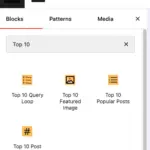 Blocks in Top 10
 Multilingual Support in Top 10

