

Contextual Related PostsOpens in a new window core plugin is hosted on WordPress.org. This makes installing it on your site extremely easy and just like any other plugin.
WordPress install (The easy way)
- Navigate to “Plugins” within your WordPress Admin Area
- Click “Add new” and in the search box enter “Contextual Related Posts”
- Find the plugin in the list (usually the first result) and click “Install Now”
- Activate or Network activate the Plugin in WP-Admin under the Plugins screen

Manual install
- Download the plugin
- Extract the contents of contextual-related-posts.zip to wp-content/plugins/ folder. You should get a folder called contextual-related-posts.
- Activate or Network activate the Plugin in WP-Admin under the Plugins screen
Installing via WP CLI
If you’re using WP CLIOpens in a new window, you can install and activate this plugin by running:
wp plugin install contextual-related-posts --activate
This plugin can also be network activated using:
wp plugin install contextual-related-posts --activate-network
Using Contextual Related Posts
Contextual Related Posts can be used in these ways to display the related posts:
- Automatically: This is the default option. You can enable/disable this using the setting Automatically add related posts to in General Settings.
- Blocks: Contextual Related Posts includes blocks that allow you to insert the related posts in the Block and Site Editors. Read more details of the blocks.
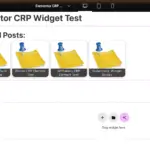
- Widget: Drag and drop “Related Posts [CRP]” widget into your theme’s sidebar and configure it.
- Shortcode:
[crp], so you can embed it inside a post or a page. View details on the shortcode. - Template tags: Use
echo_crp()to display the related posts anywhere on your theme. - CRP_Query: You can use this for a more advanced implementation. Read more details on CRP_Query.
 Efficient Content Storage and Indexing (ECSI) in Contextual Related Posts Pro and Better Search Pro
 Page Builder Integrations for Contextual Related Posts Pro
 Getting Started with WebberZone Code Block Highlighting